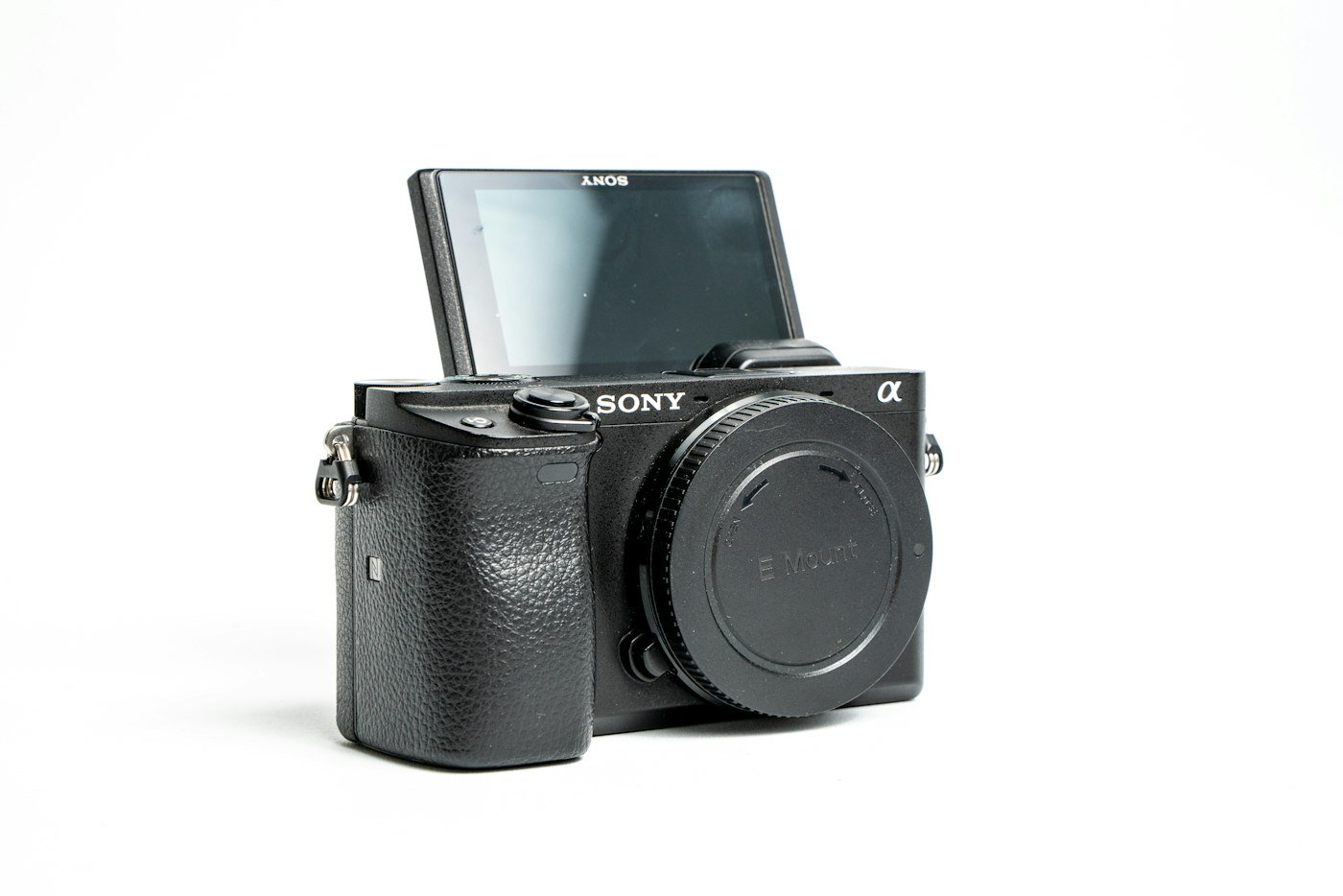
The Sony α6400 launched in 2019 and became one of the most popular APS-C mirrorless cameras thanks to its fast autofocus and compact size. Years later it’s still sold and often discounted, but newer cameras have caught up. Is it still worth buying?
Quick verdict
The α6400 is still a capable stills camera with excellent subject tracking and access to one of the biggest lens selections of any system. But its age shows: dense menus, a micro-USB port, no in-body stabilization and modest battery life. Buy it at a real discount, especially if you want a viewfinder and E-mount lenses. If you mainly shoot video, the ZV-E10 II is a better fit; if you want a long-term camera, the α6700 is the stronger upgrade.
Specifications at a glance
| Sensor | 24.2MP APS-C Exmor CMOS |
|---|---|
| Lens mount | Sony E |
| Autofocus | 425-point phase detection, Real-time Tracking and Real-time Eye AF (humans and animals) |
| Burst | Up to 11 fps |
| Video | 4K 30p (with a 1.2x crop) and 4K 24p, Full HD up to 120p |
| Stabilization | None in body (use OSS lenses) |
| Screen / viewfinder | 3″ touchscreen that tilts 180° up for selfies; 2.36M-dot OLED EVF |
| Ports | 3.5mm mic input, micro USB, micro HDMI |
| Weight | About 403g with battery and card |
| Launch price | $899.99 body only |
Pros and cons
| Pros | Cons |
|---|---|
| Fast, reliable Real-time Tracking autofocus | No in-body stabilization |
| Huge choice of E-mount lenses, including affordable third-party options | Dated, complicated menus |
| Built-in viewfinder in a compact body | Micro-USB instead of USB-C |
| Dust and moisture resistance | Small NP-FW50 battery |
| Frequently discounted | Flip-up screen gets blocked by a hot-shoe microphone |
Design and handling
The α6400 is compact and solidly built, with a magnesium alloy top and a usable grip. The screen flips up 180° for selfies and vlogging, but a microphone mounted on the hot shoe blocks it. Sony’s older menu system is dense and hard to learn; newer Sony cameras have a much cleaner layout.
Autofocus
Autofocus is still the α6400’s main selling point. Real-time Tracking and Eye AF for people and animals are fast and dependable for kids, pets and action, and they remain competitive with many newer entry-level cameras.
Image quality
The 24.2MP APS-C sensor delivers clean, detailed photos with good dynamic range. High-ISO performance is typical for the class. Sony’s color is pleasing but some people prefer Canon’s or Fujifilm’s straight out of camera.
Video
The α6400 shoots good-looking 4K with reliable autofocus, but it’s not a great video camera by 2026 standards: 4K 30p has a crop, there’s no 4K 60p, no in-body stabilization and no headphone jack, and it can warm up during long recordings. Video-first buyers should look at the Sony ZV-E10 II or Canon EOS R50 V.
Battery and connectivity
The NP-FW50 battery is rated at around 400 shots per charge, so a spare or two is essential. The camera charges over micro USB, which feels outdated next to USB-C. Wi-Fi and Bluetooth allow phone transfer through Sony’s app.
Lenses
This is where Sony shines. Beyond Sony’s own lenses, Sigma, Tamron, Viltrox and others make affordable, high-quality E-mount lenses. Popular choices include the Sigma 18–50mm f/2.8, the Sony E 11mm f/1.8 for vlogging and the Sigma 30mm f/1.4 for portraits and low light.
Alternatives to consider
- Sony α6700 ($1,399.99 body at launch): in-body stabilization, much better video, USB-C, larger battery and modern menus. Check α6700 price on Amazon.
- Sony ZV-E10 II: better and cheaper for video, but no viewfinder.
- Canon EOS R50: smaller, cheaper and easier to learn. Read our R50 review.
- Fujifilm X-M5 / Nikon Z50II: newer bodies with more modern features.
Price and value
At launch the α6400 cost $899.99 body only. It only makes sense today when it’s clearly cheaper than newer options. If the price gap to the α6700 or ZV-E10 II is small, choose the newer camera.
Frequently asked questions
Is the Sony α6400 still good in 2026?
For photos, yes. Its autofocus and image quality hold up well. For video, newer cameras offer more for similar money.
Does the α6400 have in-body stabilization?
No. Use stabilized OSS lenses, digital stabilization in editing, or a gimbal.
Is the α6400 good for vlogging?
It can work, but the flip-up screen is blocked by a top-mounted mic and there’s no stabilization. The ZV-E10 II is designed for vlogging.
α6400 or α6700?
The α6700 is better in almost every way, especially for video and battery life. Choose the α6400 only if the savings matter more to you.
The bottom line
The Sony α6400 is still a solid photo camera with great autofocus and an unbeatable lens selection. Buy it on sale if you want a compact camera with a viewfinder. If you shoot a lot of video or want a camera to keep for many years, spend more on the α6700 or choose the ZV-E10 II.